Data from each maker’s official spec page
Less limescale. Better taste. No plumbing work if you’d rather not.
I compare reverse osmosis systems, water softeners and filters on what really decides it: the problem they fix, whether you need a plumber and how often their filters are changed.
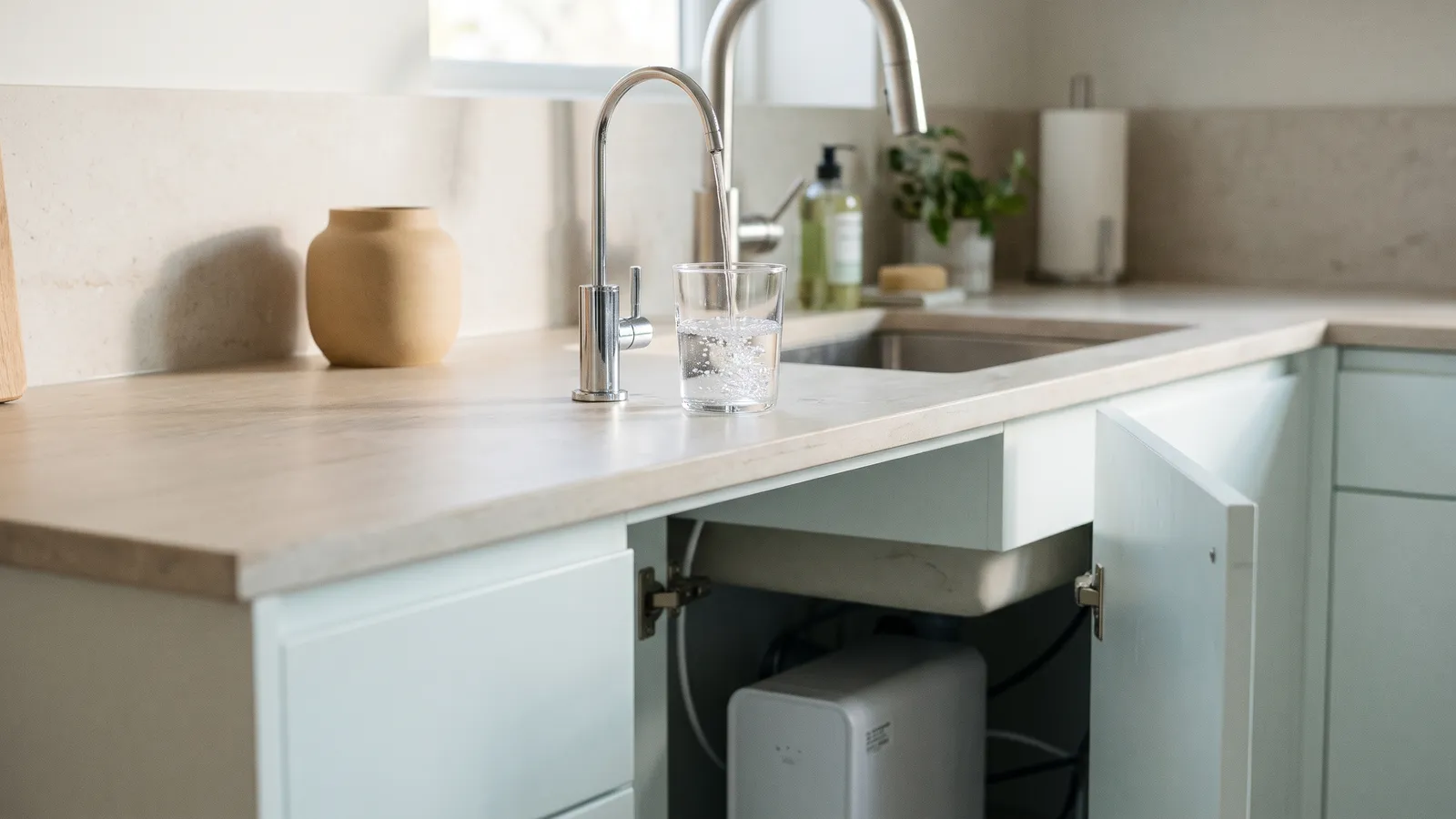
- What it removes and what it doesn’t
- Whether it needs a plumber or suits renters
- How often the filters are changed
- Certificates the maker publishes
How a reverse osmosis system works
Five steps between your usual tap and the glass
- SedimentHolds back sand and particles to protect what comes next.
- Activated carbonReduces chlorine, which is what you notice most in the taste.
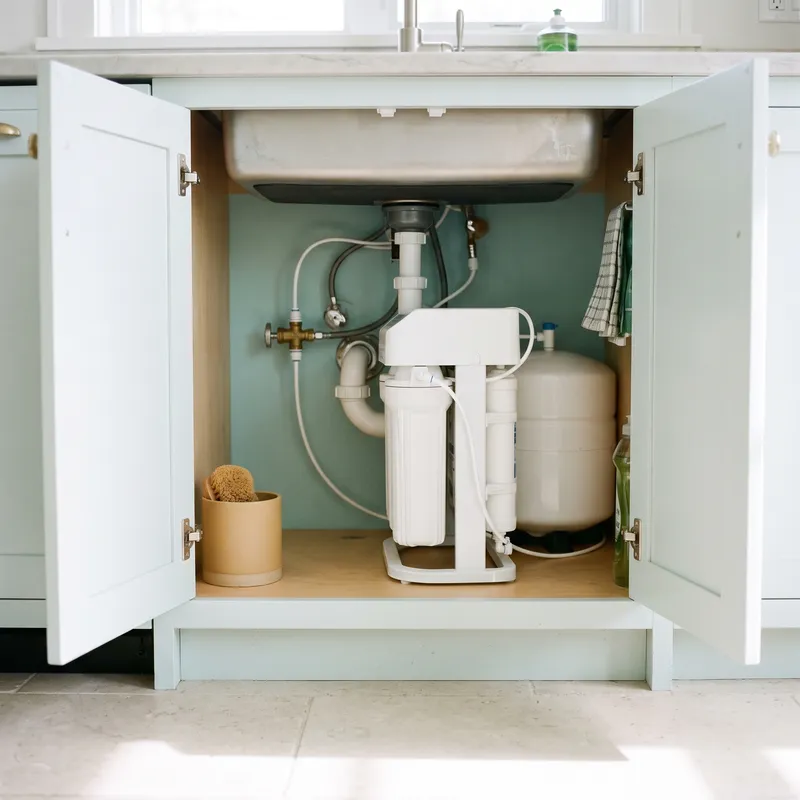
- MembraneSeparates most of the dissolved salts, limescale included.
- Waste waterPart of the water goes down the drain with what the membrane separates.
- Its own tapThe treated water comes out of a separate tap on the sink.
What’s your situation?
Comparisons and guides
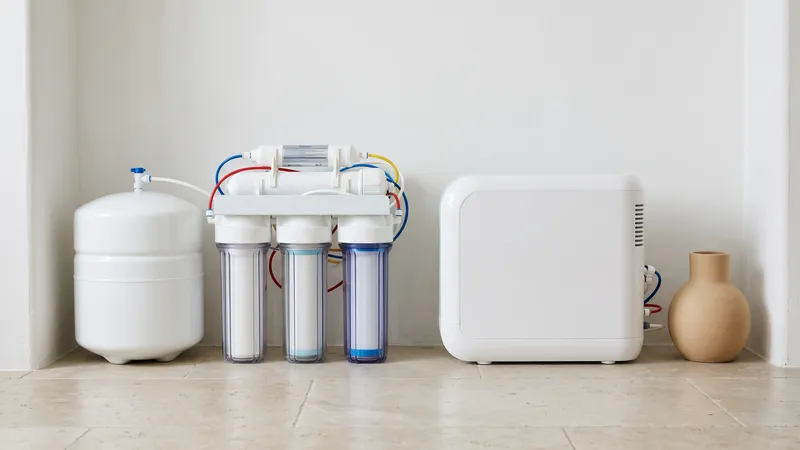
ComparisonReverse osmosis: tank or tanklessiSpring RCC7 against Waterdrop G3P600: space, power and filters.
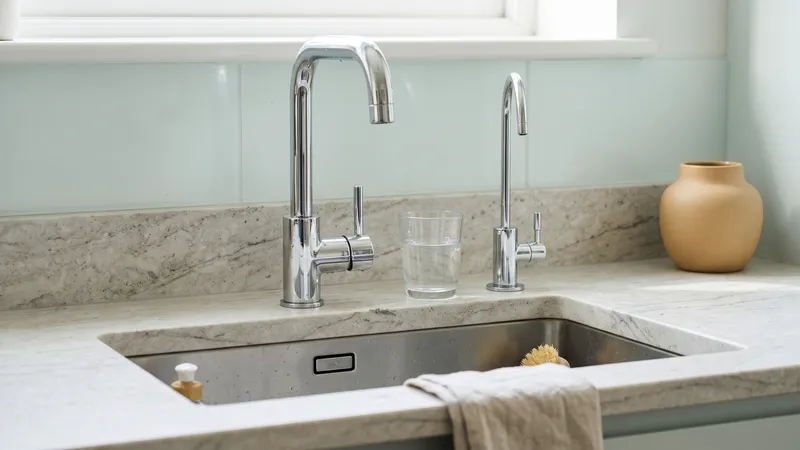
ComparisonSoftener or reverse osmosisOne takes limescale out of the whole house; the other treats drinking water. Sometimes you need both.
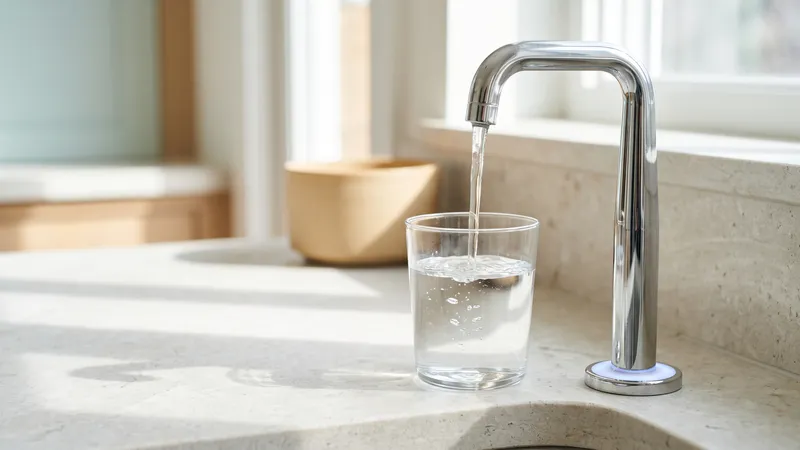
ComparisonWaterdrop G3P600 or G2P600Same flow rate, a different number of filters and a different tap.
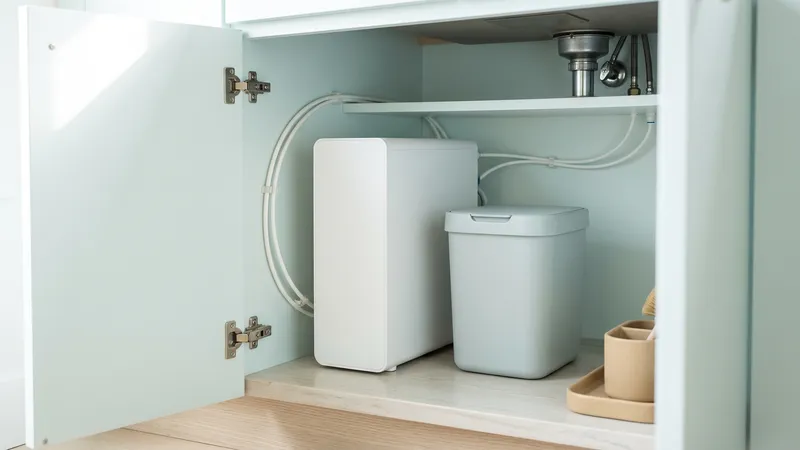
The bestTankless reverse osmosisThree Waterdrop direct-flow systems, by flow rate and filters.
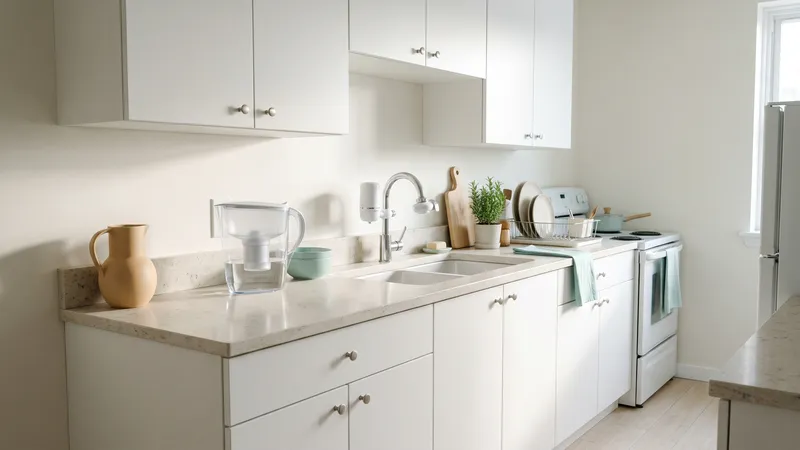
The bestWater filters for rentersEverything that goes on and comes off with no plumbing work and no landlord’s permission.
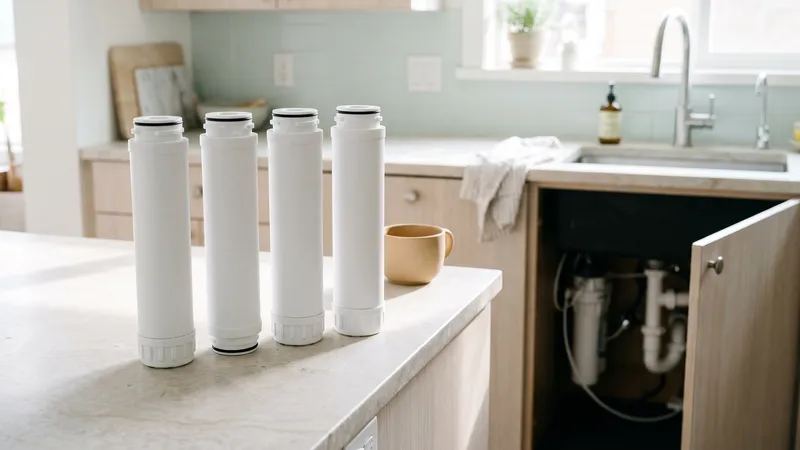
GuideReplacement filters: how oftenThe life of each filter according to each maker or listing.